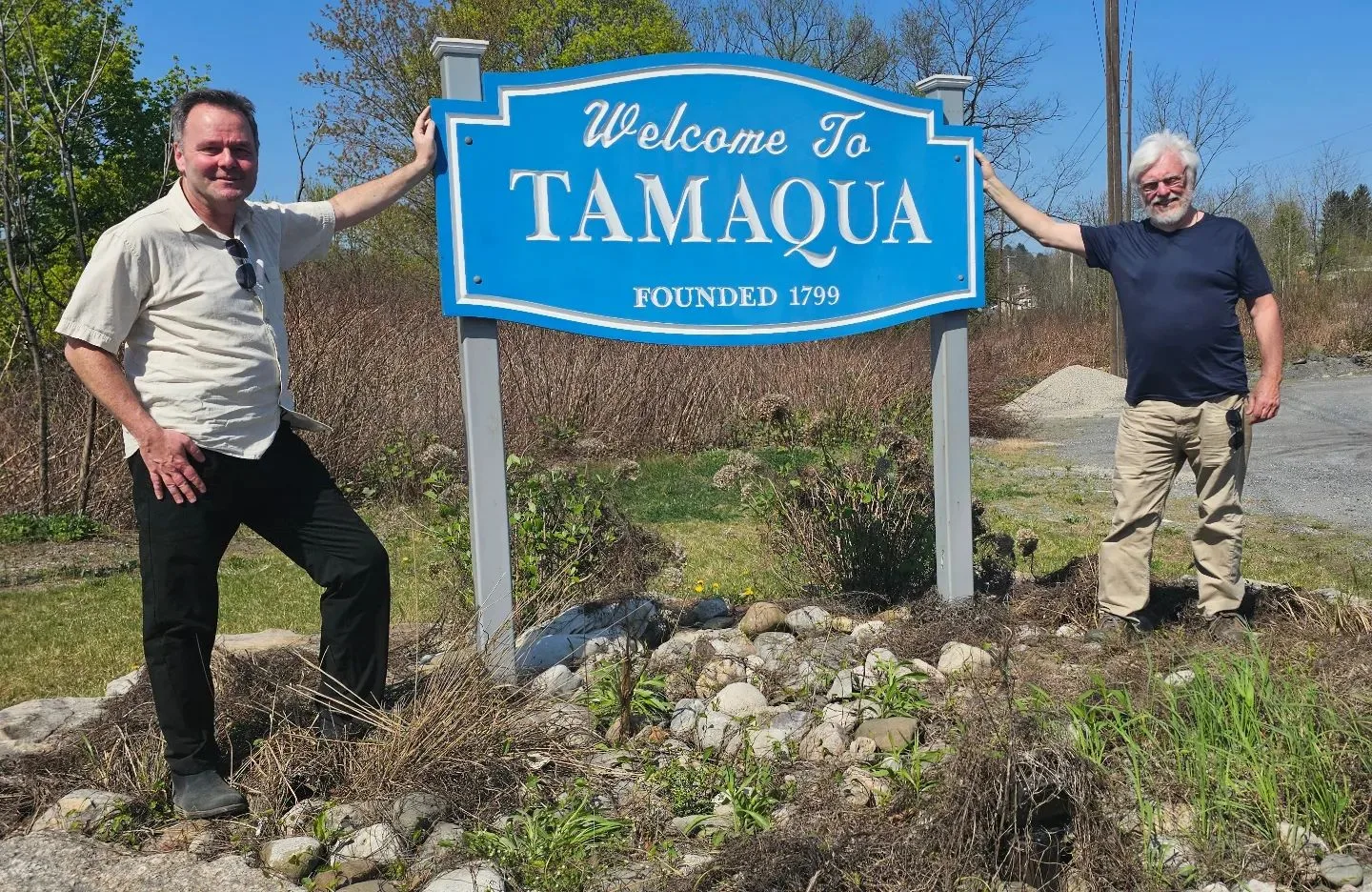
On September 19, 2006 Tamaqua Borough in Schuylkill County Pennsylvania enacted the first law to recognize legally enforceable rights for a natural ecosystem in an industrialized nation. It was two years prior to Ecuador’s better-known ratification of the rights of Pachamama (Mother Earth) on August 27, 2008.
In the summer of 2006 Ben Price had two years of community organizing experience with CELDF when he got a call from Tamaqua High School nurse Cathy Miorelli. Cathy was a dedicated health professional concerned for her students about a state-level plan to import toxic waste to “reclaim” open pit and underground coal mines in the vicinity of the school by filling them with the poisonous refuse. She doubled-down on that commitment by serving as an elected member of the Borough’s Town Council. In that capacity, she asked for CELDF’s help to block the scheme.
What once was just a “what if” thought experiment by law professor Christopher Stone devised to challenge his students’ was turned into an idea whose time has come. Thanks to Cathy’s commitment to community, and the community’s commitment to common sense and finding a way around the legalized practice of exporting America’s poison-laden waste to vulnerable rural areas, Stone’s “what if” proposal that things other than human beings and corporations have legal rights was turned into a reality. Following months of neighborhood gatherings, deep discussions, weekend presentations of CELDF’s signature Democracy School, and public hearings in which trepidations and optimism were expressed in equal measure, CELDF produced an ordinance that put the interests of the community and the living world ahead of the state and industries’ economic priorities.
The ordinance answered Professor Stone’s hypothetical “what if nature itself had legal standing to challenge the rampant degradation of ecosystems to the point of unviability by modern industrial society?” At the time, we celebrated what seemed a very significant departure from the legalized vandalization of nature for profit, but the legacy media made it clear it would remain an insignificant blip in the history of the law, for the sake of preserving business as usual. And then Ecuador happened. And then dozens of other communities across the United States, then Bolivia and India and Spain, and Ireland, and . . .
And the rest is history in the making.
More coverage here:
Buffalo’s Fire – Land-based legal movement celebrates 20 years
Pagosa Daily Post – ESSAY: 20th Anniversary of ‘Rights of Nature’