Kai Huschke, CELDF Executive Director
Kai@CELDF.org
509-607-5034
KEPW – Whole Community News: CELDF releases 1st ‘State of Rights of Nature Report’
After 20 years of controversial and challenging work, the “rights of nature” movement, which aims to extend legal protections to the natural world, finds itself on shaky ground, facing counterattacks, outright bans, corruption, cooptation, and — in a few inspiring cases — victories.
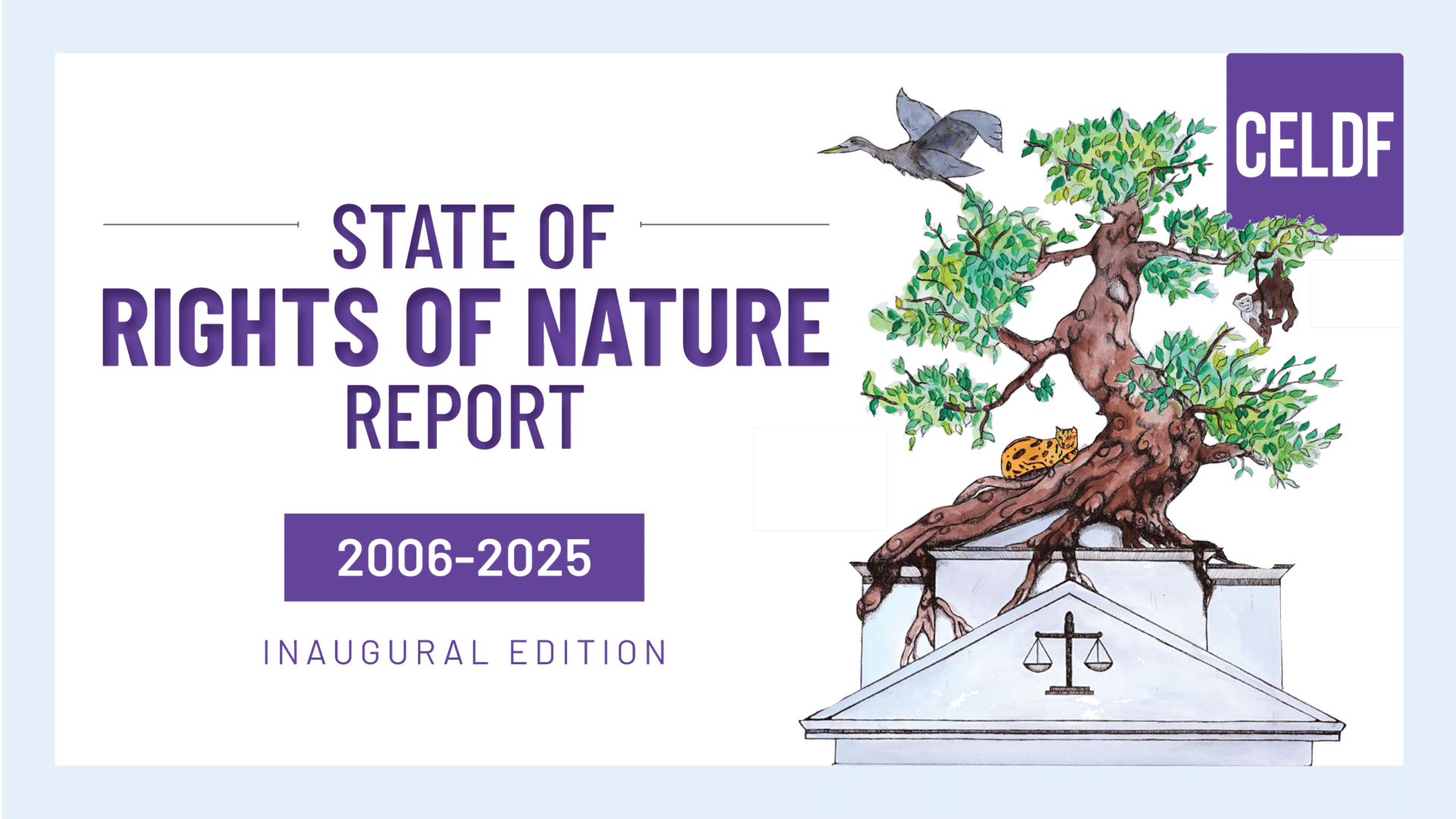
A new report called the State of Rights of Nature explores these issues in detail based on the expertise of the Community Environmental Legal Defense Fund (CELDF), the organization responsible for the first modern “rights of nature” law in the world which passed in 2006.
For thirty years, CELDF has worked with hundreds of communities across the U.S. and internationally on rights of nature, participated in numerous coalitions and conferences, and watched a spark turn into a global movement. But the growing popularity of rights of nature has also fueled a backlash which, in some cases, has led powerful forces to co-opt movement language and advocates to water down their rights of nature initiatives to the point of near irrelevance.
States like Ohio, Florida, Idaho, and Utah have enacted state legislation banning rights of nature, and more and more efforts using “rights of nature” language doesn’t achieve the fundamental goal of the movement: expanding legal protections.
“Over the past decade we’ve seen more and more cases of co-optation that, if left unchallenged, will work to dilute, neutralize, and defeat the goals this movement was founded on,” says Kai Huschke, Executive Director at CELDF. “Our report aims to combat this to ensure the integrity of our efforts.”
Besides critiquing co-optation, the State of Rights of Nature report details the history of the rights of nature movement, explains the most important legislation and court rulings of the past decade, and lays out principles to help advocates distinguish between rights of nature initiatives which have been corrupted and those which have not.
Crucially, it also focuses on the issue of power — a topic often ignored in this era of global climate destabilization, biodiversity collapse, and brutal neo-colonial inequality.
“Enforcing rights of nature laws threatens the most powerful people and institutions in the world,” the report states. “They will oppose any threat to their power. Those with power will not sit back and let rights of nature advocates use governmental and legal structures – structures they have largely designed and control – to threaten their power.”
According to Will Falk, a CELDF Staff Attorney who has worked on rights of nature for more than a decade and who authored the report, now is a critical time to intervene on these issues.
“As rights of nature gains momentum around the world, it is important that advocates guard against co-optation and the pressure that powerful opponents are already putting on our movement to render it ineffective,” Falk writes. “It’s also critical that we stay on guard against impulses which often arise inside our movements when, facing setbacks and extreme challenges, some activists wish to render our measures toothless in return for greater public acceptance.”
This is the inaugural edition of the “State of Rights of Nature Report,” which CELDF will release annually in the future. Join the CELDF email list to be notified of future reports.
The report is available now, for free, on the CELDF website and as the most authoritative and truth-telling resource on the rights of nature movement, is an essential resource for attorneys, community organizers, law students, and members of the judiciary.
###
About CELDF — Community Environmental Legal Defense Fund
CELDF is a nationwide organization of activists, lawyers, and allies who work to confront systemic injustice and restore humanity’s reciprocal relationship with Earth. For over 30 years we’ve helped communities resist corporate exploitation through understanding the false democratic promises of the regulatory model and asserting rights to local self-governance grounded in ecological balance and collective power.
Today, CELDF advocates for the rights of nature through legislation like the Great Lakes Bill of Rights, local initiatives, educational and cultural programs, and provides frontline support for community resistance and resilience. Contact CELDF to partner with us, to ask advice, or get involved.
More information about CELDF, including photos pre-approved for media use, can be found in our press kit.