Enforcing rights of nature (RoN) laws would threaten the most powerful people and institutions in the world, those principally behind the destruction of the planet. The most powerful people and institutions in the world currently derive their power from exploiting the natural world and violating RoN. – Excerpt from the introduction of CELDF’s State of Rights of Nature Report
Nearly 20 years ago CELDF took what was an idea – a theoretical exercise imagining the recognition of legal rights for the rest of nature – and ran with it. That action kicked-off what is known today as the global rights of nature movement. From a law review article in the 1970’s, to a small Pennsylvania borough in 2006, to over 30 nations and growing in 2026, legal recognition of the rights of nature is not slowing down, nor fading away.
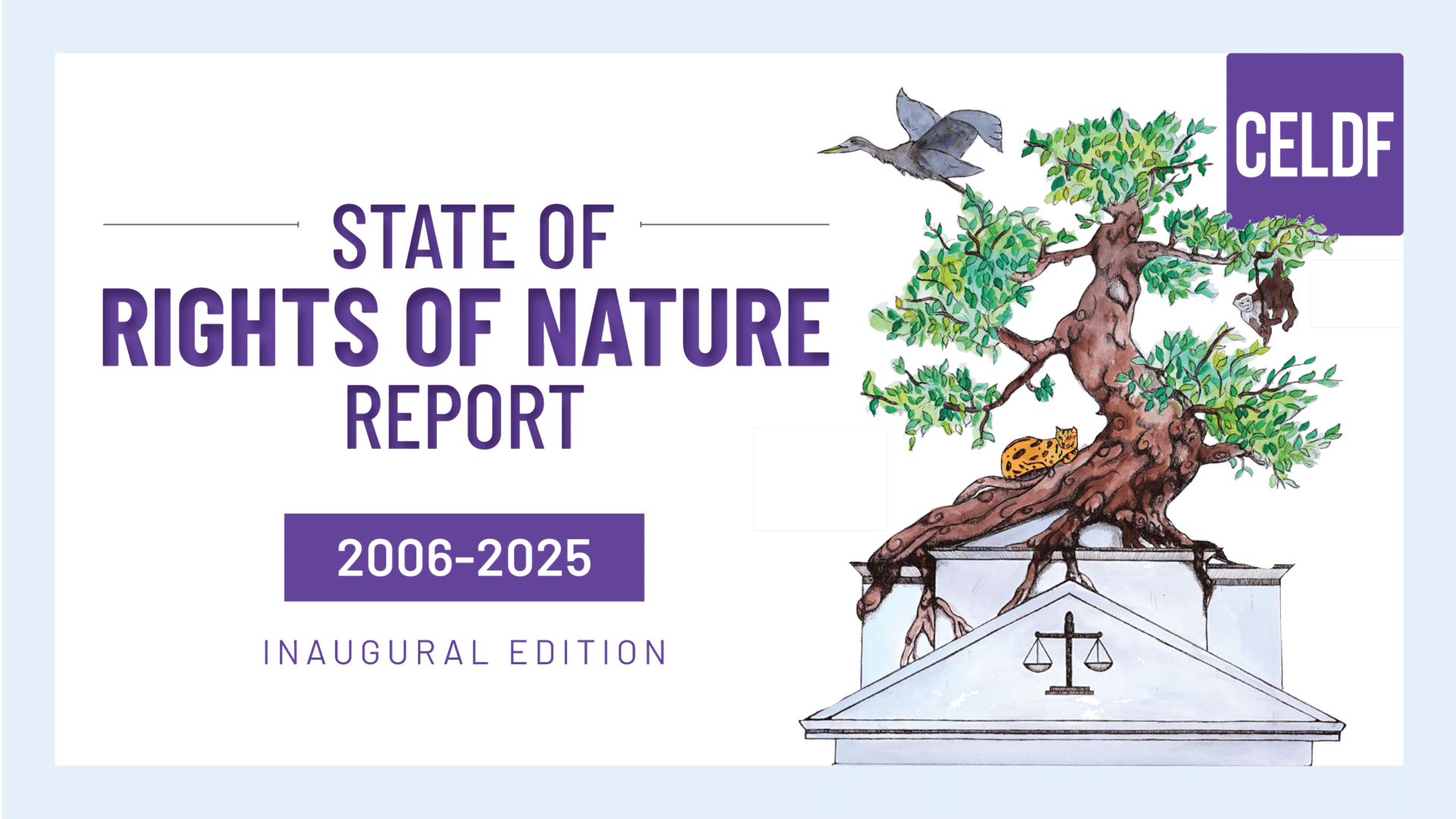
This first edition of CELDF’s State of Rights of Nature Report represents yet another important contribution from CELDF to those studying, documenting, or actively working for rights of nature.
The report covers the following:
- Short history of rights of nature
- CELDF’s leading role in advancing rights of nature
- Rights of nature principles
- Key rights of nature events over the years + in 2025
- Breakdown of the good, the bad, and the ugly with rights of nature
CELDF will be producing a report annually to document recent happenings as well as to offer up critiques.
As RoN gains momentum around the world, it is important that advocates guard against cooptation and the pressure that powerful opponents are already putting on our movement to render it ineffective. – excerpt from the conclusion of CELDF’s State of Rights of Nature Report
READ CELDF’S STATE OF RIGHTS OF NATURE REPORT HERE
Inside climate news
Rights of Nature Laws Are Coming Up Against Legal Systems Designed for Destruction by Katie Surma
In its inaugural State of Rights of Nature report, the Community Environmental Legal Defense Fund (CELDF) said that despite the growth in rights of nature laws around the world, climate change has worsened, more species are going extinct and toxic pollution is increasing.
Paulo Kirk’s Substack
CELDF has a new report out, and I got to talk with a friend of the show, Kai Huschke, about the autopsy of RoN — Airs July 1, KYAQ.org: Finding Fringe