Defending the most abused ecosystems on the planet – The Global Push for the Rights of Wetlands
In American culture wetlands are akin to the redheaded stepchild of ecosystems. As that antiquated and demeaning phrase goes so too has the attitudes, behavior, and legal structure around the treatment and nearly complete lack of understanding and relationship with wetlands goes. From the vantage of industrialists, wetlands are either to be filled in for the sake of progress or destroyed when in an inappropriate location for economic pursuits and just create a “new” wetland in an alternative location. These actions have resulted in the United States losing 50% of its original wetlands over the last 200+ years. On a global scale, and yes other societies have mimicked the abusive behavior of the United States when it comes to wetlands, the calculation is that Earth has lost 22% of its wetlands in just the last 50 years.
Why do wetlands matter? Wetlands are like the liver and kidneys for the planet. They store more carbon than any other ecosystem, provide filtration services, buffer against the impacts of flooding, and host forty percent of all plants and animals by providing food and habitat.
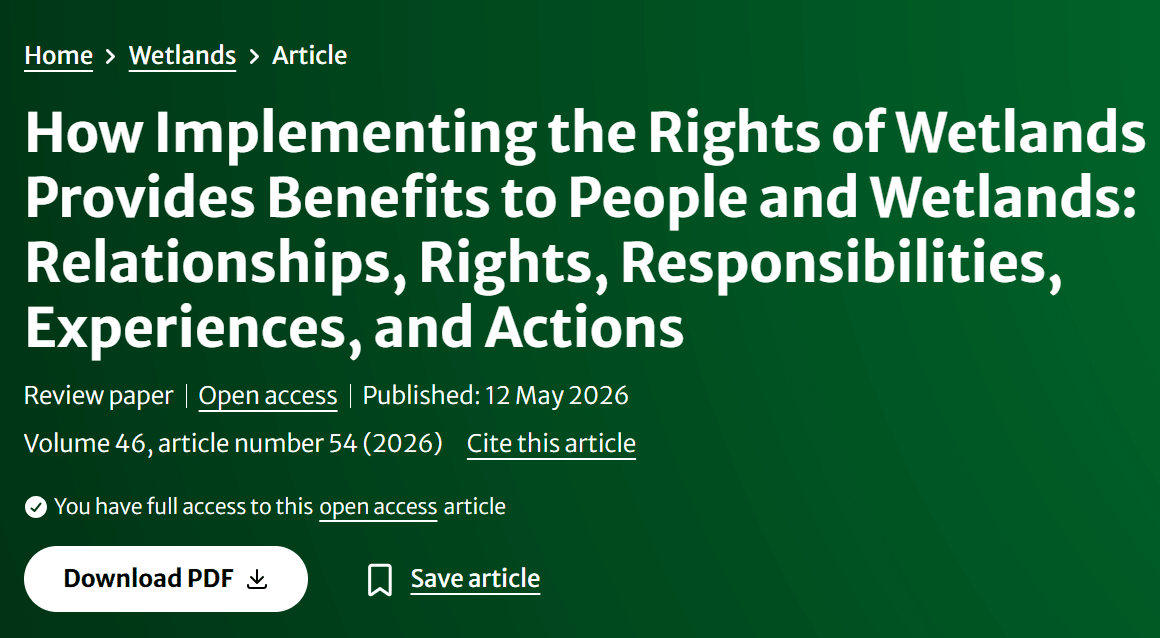
For the last five years CELDF has been collaborating with an international coalition to advance legal rights of wetlands. As with other rights of nature efforts this one is focused on changing our abusive relationship/systems towards wetlands to one based on right-relationship in order to bring a halt to more wetland loss. Among a number of outcomes from the collaboration is a recent journal article entitled “How Implementing the Rights of Wetlands Provides Benefits to People and Wetlands: Relationships, Rights, Responsibilities, Experiences, and Actions.”
The article covers what rights for wetlands need to be recognized as, the responsibilities of humans towards and with wetlands, the legal structures necessary to effectively implement and enforce wetland’s rights, and examples of rights of wetlands in practice.
Two excerpts from the article: